
Belonging Matters: Supporting Culturally Diverse Children in Foster Care


Joanna Young, M.S., CFLE February 23, 2026

Last year, more than 6,400 Oklahoma children were placed in out-of-home (foster) care1 and separated from their biological families due to child maltreatment. Of those children, roughly a third stayed with families who were not their biological relatives, and more than half of the children were non-white.1 This is significant because in multiple reports and studies including foster parents, most were white.2-4
What does this mean for culturally diverse children living with families who are not like them?
According to a 2025 review of studies of children in foster care by Ezekwem-Obi et al., children who are placed in out-of-home care with families who differ from them in things like race, ethnicity, religion, or language often face challenges that may hinder their sense of belonging and ultimately their well-being.5 These challenges include trying to find ways to fit in with their caregivers’ culture while determining whether to maintain or let go of their own, a situation which the authors say can contribute to “anxiety and uncertainty about who they are and where they belong” (p. 2).5
So what can caregivers and others involved in the out-of-home care of culturally diverse children do to help foster a sense of belonging? The following tips are based on the Ezekwem-Obi et al. study:5
Understand that culture helps protect children. The authors found that culture “helps children identify who they are as individuals [and] can help children determine how they fit into different contexts, thus providing them with a feeling of safety and confidence” (p. 2). 5
Build trust by being trauma-informed. Children in foster care go through a lot. The authors report that before entering care, many had already been disconnected from their families and lived in unstable or unpredictable situations—and after entering care, living with people who are culturally different can intensify their trauma.5 For caregivers, being trauma-informed helps build trust and a sense of safety for children.6
Listen to the child. Ezekwem-Obi et al. found that children in foster care need to be heard—and heeded. The children in their study “wanted more than just being listened to. They wanted their voices to have an impact…to be listened to and included as much as they want their perspectives and experiences to be taken seriously” (p. 6).5 Caregivers can ask children about their life experiences, needs, desires, and hopes and actively consider them when making decisions that affect them.
Learn more about the child’s culture and welcome it. The authors found that children in foster care appreciated having their differences valued, respected, and welcomed. They “acknowledged the positive difference it made when their carers tried to learn more about their birth culture and incorporated some cultural elements into their daily routines. This made them feel valued and as a part of the family” (p. 7).5 Caregivers can look up recipes, read cultural magazines, watch diverse television shows and educational programming—get to know different cultures and be more informed about the children in their care.
At Hope for the Future, we value and respect cultural, ethnic, and racial diversity. We want the children we serve to feel valued and cared for, which means attending to their unique needs. In honor of Black History Month, we would like to share one way we tend especially to the African-American and biracial children we serve, which make up nearly half of our client population.
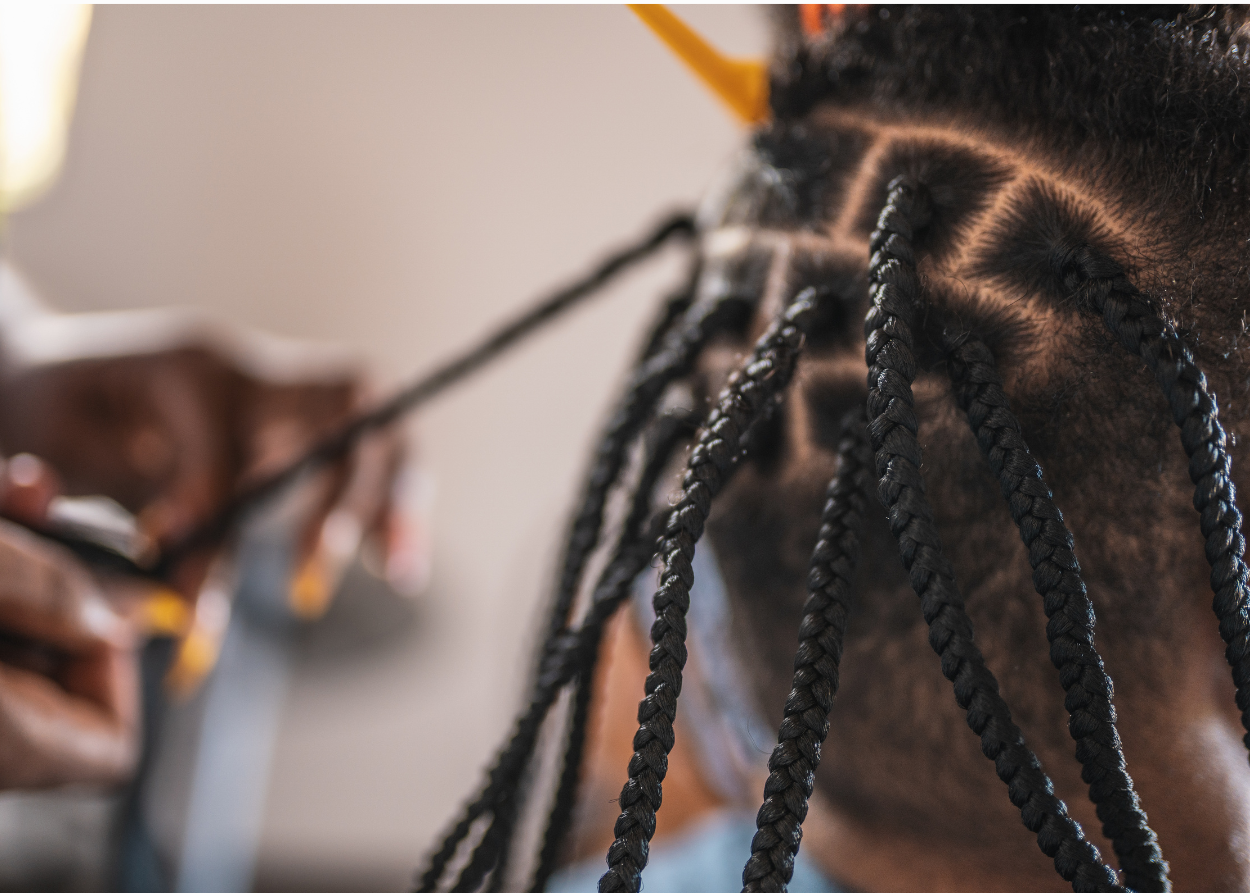
With the help of our community partners, Cor-C-Cuttz, Cut it Forward, and The Hair Initiative, we regularly provide our families with specialized hair products and hands-on training for African American and biracial hair care as well as professional haircuts for the children we serve. Cor-C-Cuttz provides quality haircuts at no cost, eliminating the financial burden for caregivers and enhancing children’s sense of belonging and cultural identity. These partnerships help caregivers eliminate the high costs and guesswork of hair maintenance, empowering them with the skills to provide culturally appropriate hair care for children.
To learn more about Cor-C-Cuttz, visit https://www.facebook.com/CorCCuttz or Cut it Forward, visit https://www.facebook.com/cutitforward. For more information about the nonprofit, The Hair Initiative, visit https://www.thehairinitiative.org.
To volunteer, get involved, or donate to Hope for the Future, visit https://www.h4tf.org/donate.
References:
Oklahoma Human Services. (2025). 2025 statistical tables. Oklahoma Human Services Statistical Tables. https://oklahoma.gov/okdhs/about-us/ar26/stats.html
Florida Institute for Child Welfare. (2023). Latent profiles of foster parents and their associations with intent to disrupt placement and turnover (Report). Florida Institute for Child Welfare, Florida State University. https://ficw.fsu.edu/assets/documents/Latent%20Profiles%20of%20Foster%20Parents_Report_7.23_Final.pdf
U.S. Department of Health and Human Services, Administration for Children and Families, Children’s Bureau. (2023, May 23). Missouri Child and Family Services Review: Round 4 statewide assessment [PDF]. https://acf.gov/sites/default/files/documents/cb/mo-cfsr-r4-swa.pdf
U.S. Department of Health and Human Services, Administration for Children and Families, Children’s Bureau. (n.d.). Child and Family Services Reviews Round 4 Statewide Assessment (in cfsr r4 swa.pdf). https://acf.gov/sites/default/files/documents/cb/in-cfsr-r4-swa.pdf
Ezekwem-Obi, A., Blythe, S., & Grace, R. (2025). ‘Your culture is in you’: Cultural identity and connection for children from culturally diverse backgrounds in care: A scoping review of child perspectives. Child Protection and Practice, 5. https://www.sciencedirect.com/science/article/pii/S2950193825000415
National Network to End Domestic Violence. (n.d.). Understanding the importance of trauma informed care. https://nnedv.org/spotlight_on/understanding-importance-trauma-informed-care